
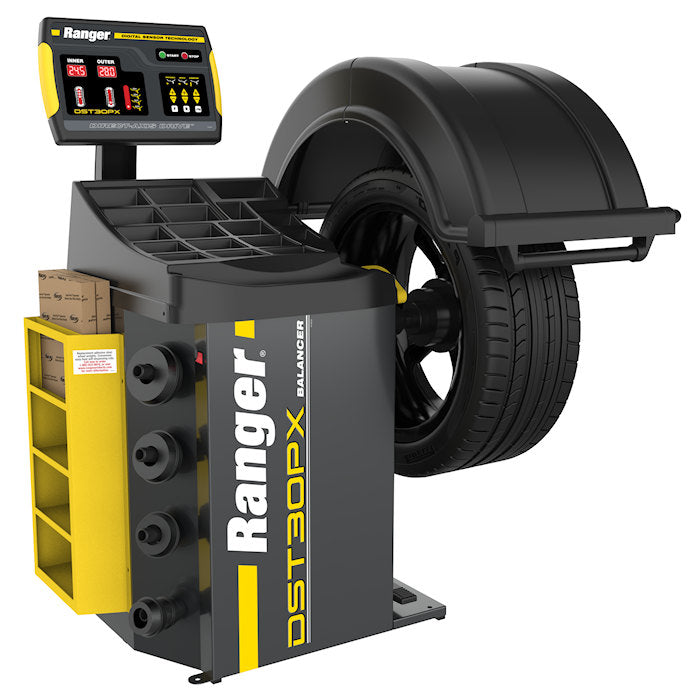
Prepare wheel dimensions, vehicle coverage and accessory requirements so the offered wheel balancer can be checked against your workshop’s work.
Start with the wheels you handle
Explain the vehicle types you service and provide the wheel information available to you. Ask the supplier to confirm compatibility with the specific offered machine and its adapters.
- Wheel diameter and width ranges
- Relevant wheel weights
- Mounting requirements or representative wheel details
- Any particular measurement or balancing functions required
Ask about adapters and configuration
Confirm the supplied cones, adapters and other mounting components rather than assuming everything in a photograph is included. Explain any functions your current workflow depends on and request confirmation for the proposed model.
Ask for the applicable manual, electrical requirements and space needed for operation. Installation and commissioning should follow the selected equipment’s documentation.
Check condition and supporting evidence
Request actual-unit photographs and available operating or inspection records. Ask which checks and refurbishment tasks have been completed, and whether any parts or accessories are missing.
If particular calibration or verification records are important to your purchase, ask what documentation is available for that unit. Do not treat an illustrative image as proof of condition or performance.
Combine related equipment in one enquiry
If you are also considering a tire changer or other tire-service equipment, include the full list and quantities. Share your destination and preferred timing so the discussion can cover the purchasing plan together.